Redesigning My Personal Site: Cleaner, Sharper, More Me
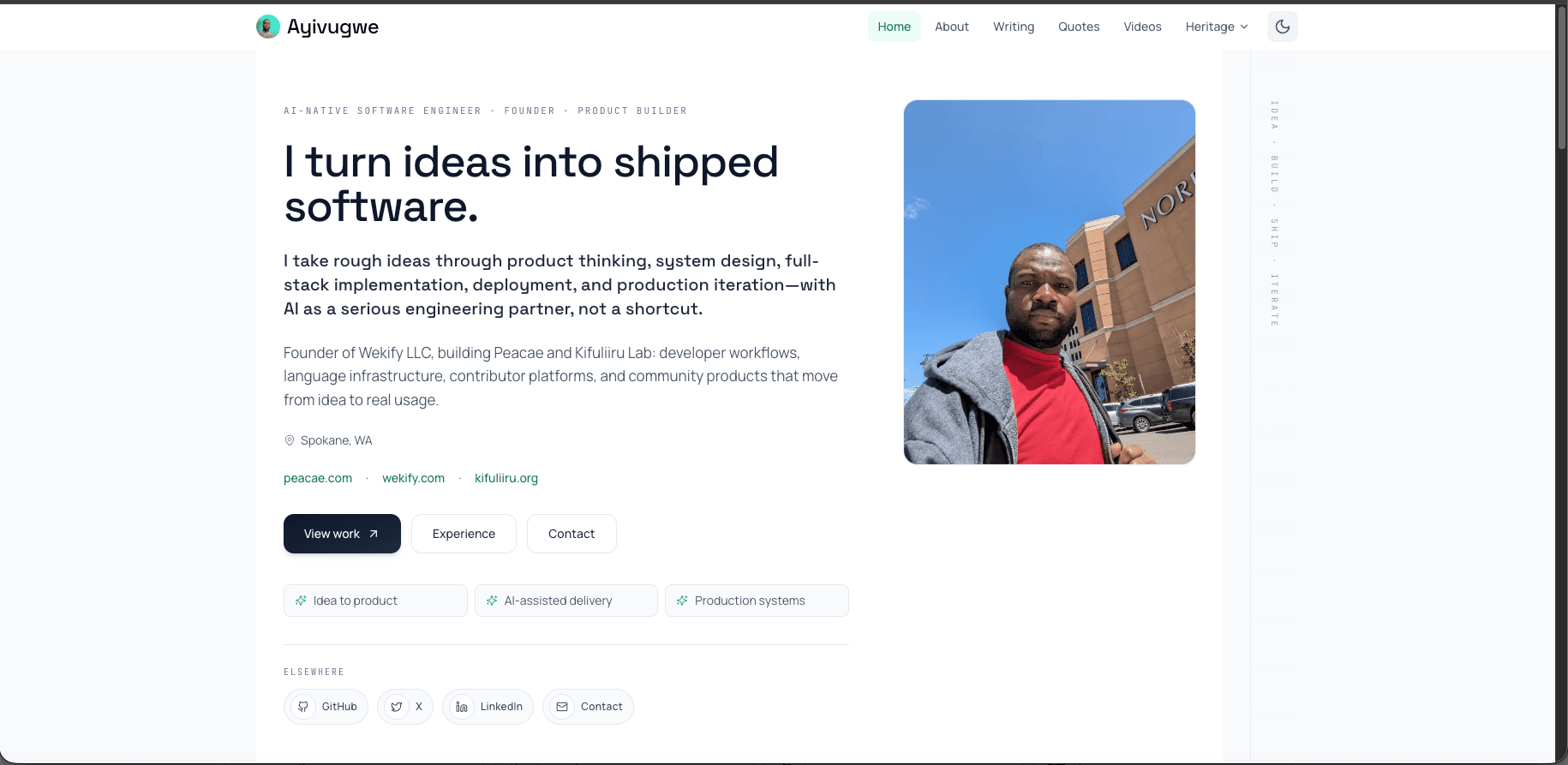
Every few years I find myself looking at my personal site and feeling like it no longer fits. Not because the technology is outdated or the content is wrong — but because the person it describes has moved on. That's what happened here. The old site felt cluttered, a bit defensive, like it was trying too hard to prove something. This new one is an attempt to be more direct about who I am and what I actually do.
Why redesign at all?
I've been shipping software full-time for years now — across language infrastructure, developer tooling, and community platforms. My work spans Wekify, Peacae, and Kifuliiru Lab. At some point the old structure stopped mapping to reality. I had sections that made sense when I was trying to establish credibility but now just added noise. A personal site should answer one question quickly: who is this person and is their work relevant to me?
The redesign forced me to answer that question for myself before answering it for anyone else.
The design philosophy
I wanted something that felt like the software I build: functional, considered, with no wasted surface area. The palette is mostly slate with emerald as a single accent — enough warmth to feel human, not so much that it becomes a brand exercise. The typography stays in one weight family and leans on spacing to create hierarchy rather than size changes.
The sidebar text — IDEA · BUILD · SHIP · ITERATE — is the most honest summary I could write of how I actually work. It's not a slogan. It's the loop I'm in on any given day across all my projects.
What I removed
The previous version had a long skills list, a timeline of every role I'd held, and several sections that were basically resume content in disguise. I cut all of it. The work speaks for itself — anyone who wants to go deep can look at the companies page or reach out directly. The home page now has one job: tell you what kind of engineer and builder I am, and give you a path to see more.
- Removed the exhaustive skills grid
- Collapsed the timeline into a dedicated Experience page
- Dropped the carousel-style project previews
- Simplified the footer to only what matters
The Heritage section
This is the part I'm most glad I added. A lot of my engineering work is inseparable from my cultural work — building digital infrastructure for the Kifuliiru language, documenting Ibufuliiru, and creating platforms that the Bafuliiru community can actually use. I wanted that to be a first-class part of this site rather than a footnote.
The Heritage dropdown now links to three dedicated pages — Kifuliiru (the language), Ibufuliiru (the homeland), and Abafuliiru (the people) — each with links out to kifuliiru.com and its sub-pages. It's a small thing structurally but it matters to me that these aren't buried.
Technical decisions
The stack is Next.js App Router, TypeScript, and Tailwind. Nothing exotic. I made a deliberate choice to stay boring here — the site's job is to be fast and readable, not to showcase framework experiments. Dark mode is handled through a simple context provider and class-toggling rather than CSS variables, which keeps the conditional logic explicit and easy to reason about.
The one area I went a bit further is the culture pages, which use a sharp-bordered card system instead of rounded components. It felt right for content that's more documentary in nature — less UI, more reference.
What's next
The blog section is live but thin — these posts are a start. I want to write more regularly about the product decisions behind Wekify and Kifuliiru Lab, the engineering tradeoffs in building language tools, and occasional reflections on working at the intersection of technology and cultural preservation. If that sounds interesting, check back.
Related Posts
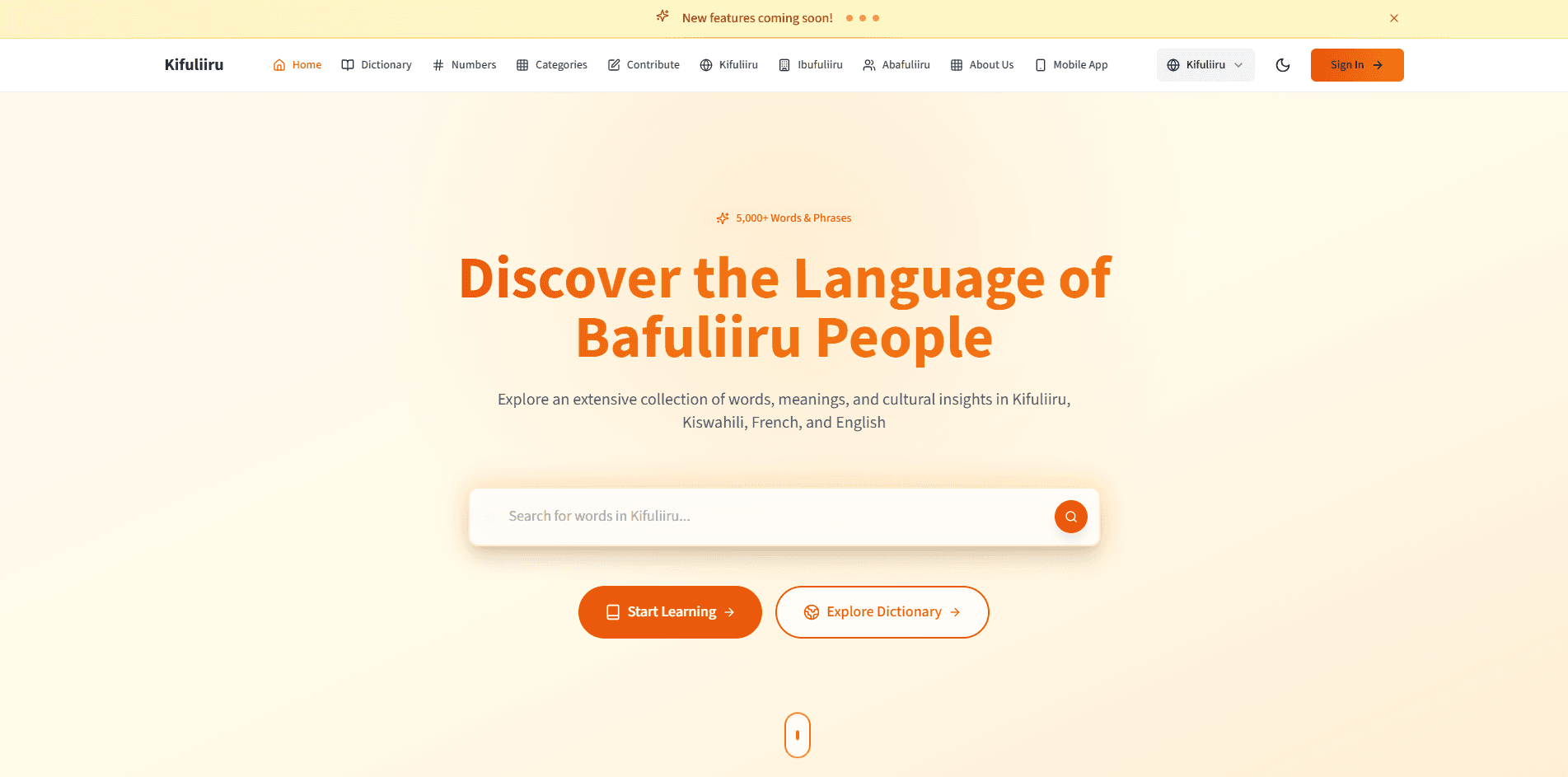
Building a Kifuliiru Dictionary: A Journey in Language Preservation
Exploring the challenges and triumphs of creating a digital platform for preserving the Kifuliiru language.
3/14/2024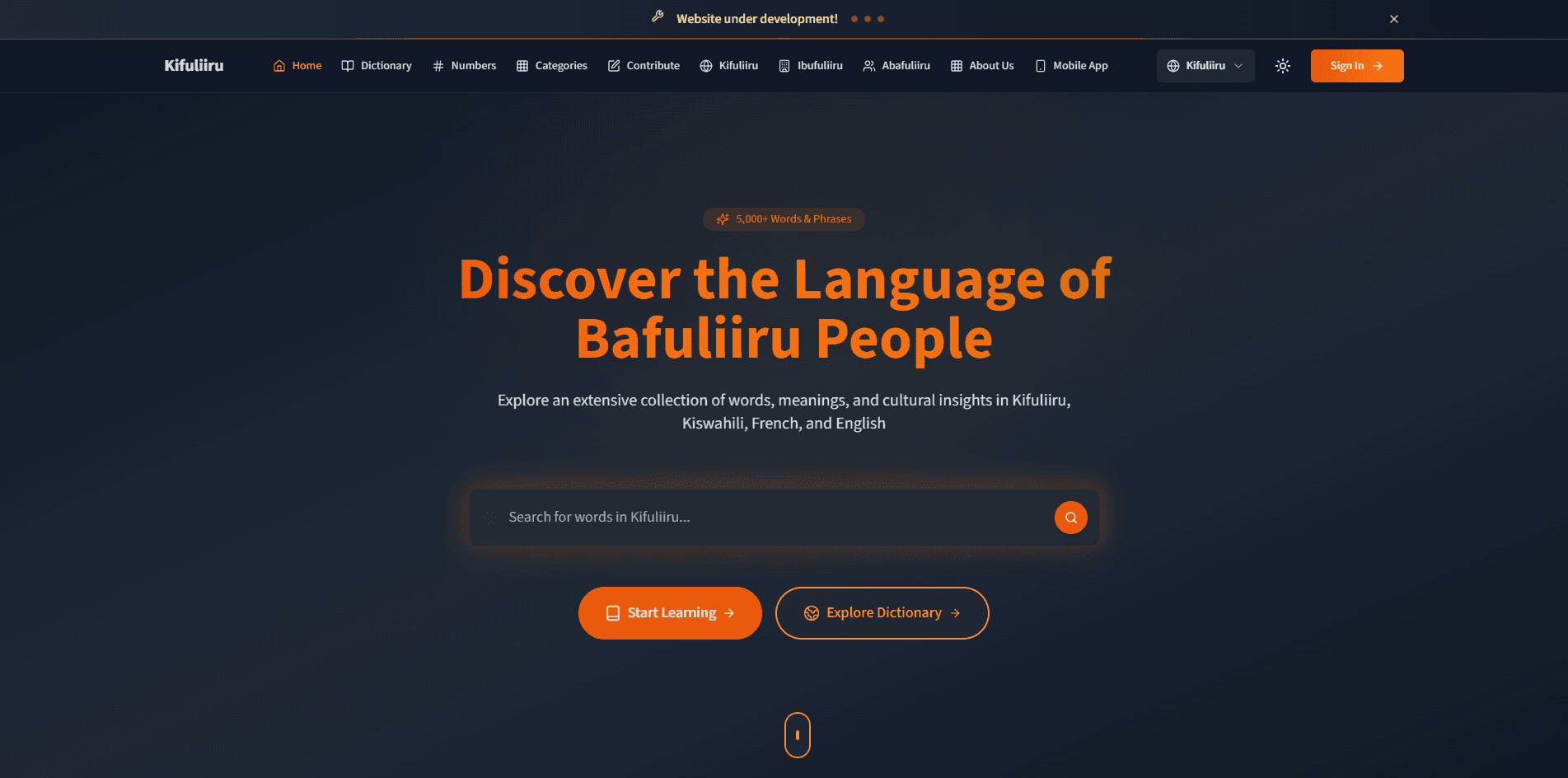
Modern Tech Stack for Cultural Heritage Projects
How we're using Next.js, TypeScript, and modern tools to build platforms that preserve cultural heritage.
3/10/2024